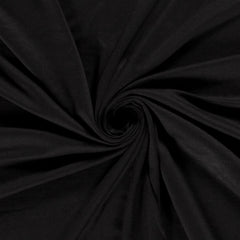
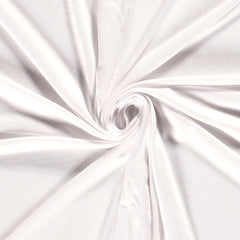
Viscose for Garment Production: Which Type Should You Choose?

Viscose for Garment Production: Which Type Should You Choose?

Viscose is widely used in garment production because it combines a soft hand, good moisture absorption and a fluid drape. At Nooteboom Textiles, viscose appears in several different constructions and blends, including Viscose, Viscose Jersey, Viscose Poplin, Viscose Nylon and Poly Viscose. These fabrics can behave very differently in terms of stretch, stability, recovery and garment shape. For buyers and garment manufacturers, construction, weight, drape, shrinkage and care requirements should therefore be assessed together.

Viscose for garment production

Viscose is a regenerated cellulose fibre that generally feels soft, absorbs moisture well and creates a fluid silhouette. It is less strong in the wet state than cotton or linen and can be sensitive to shrinkage and creasing. Within the Nooteboom Textiles range, viscose is available in both woven and knitted constructions as well as blends with polyester and polyamide. The right choice depends on whether the garment requires maximum drape, stretch, a cleaner woven structure or additional stability and durability.

What is viscose?

Viscose is a regenerated cellulose fibre produced from plant-based cellulose. The cellulose is dissolved during production and regenerated into fibres or filaments that can then be spun or processed into textile yarns.

The fibre absorbs moisture readily and generally feels cool and soft during wear. It also has relatively low stiffness, which is one reason viscose fabrics often fall more fluidly than compact cotton or synthetic fabrics.

Why is viscose widely used in clothing?

One of the main reasons viscose is used in clothing is its drape. The fibre works particularly well in garments where movement and a softer silhouette are important, such as blouses, dresses, skirts and loose trousers.

Its moisture absorption also makes it relevant for garments worn close to the skin and for lightweight clothing. At the same time, viscose requires more attention during production because it can lose strength when wet, crease relatively easily and change dimensions after washing.

These characteristics make fabric testing particularly important before bulk production.

What types of viscose are available at Nooteboom Textiles?

At Nooteboom Textiles, viscose appears in several different fabric categories. The fibre content may be similar, but the construction and blend composition can create very different performance characteristics.

Viscose

Woven Viscose is particularly relevant when a garment needs a soft and flowing silhouette. Depending on yarn type, weave density and finishing, the fabric can range from very fluid to slightly more structured.

It is commonly used for blouses, dresses, skirts and loose-fitting trousers. For buyers, the main points to assess are drape, opacity, shrinkage and dimensional stability after washing.

Viscose Jersey

Viscose Jersey combines the softness and fluidity of viscose with the flexibility of a knitted construction. The knitted loops naturally provide stretch, while elastane is often added when additional stretch and recovery are required.

Within the Nooteboom Textiles range, Viscose Jersey is particularly relevant for dresses, tops, skirts and fitted garments where movement and flexibility are important. Because the construction is both fluid and extensible, dimensional stability and recovery should always be checked carefully.

Viscose Poplin

Viscose Poplin combines viscose with a compact woven Poplin construction. The fine woven structure gives the fabric a cleaner, more controlled surface than a very fluid woven viscose.

This makes Viscose Poplin suitable for blouses, shirts, shirt dresses and skirts where some structure is required without losing the softer hand associated with viscose. The fabric generally provides a more defined silhouette than loose, flowing Viscose qualities.

Viscose Nylon

Viscose Nylon combines viscose with polyamide. Viscose contributes softness, moisture absorption and drape, while polyamide can contribute additional strength, abrasion resistance and dimensional stability.

This combination is particularly relevant when a garment needs more durability than a pure viscose quality would normally provide. The exact behaviour depends strongly on the blend ratio and fabric construction.

Poly Viscose

Poly Viscose combines viscose with polyester. Viscose contributes softness and drape, while polyester can improve shape retention, crease resistance and dimensional stability.

This makes Poly Viscose particularly relevant for trousers, skirts, dresses, blazers and other garments where more structure is needed. Compared with a highly fluid pure viscose, the fabric can provide a more controlled and stable silhouette.

Which viscose should you choose?

Start with the silhouette and performance requirements of the finished garment rather than selecting on fibre content alone.

For a blouse or dress that needs maximum fluidity and movement, a woven Viscose can be suitable. When a similar drape needs to be combined with flexibility and stretch, Viscose Jersey is more relevant.

Viscose Poplin provides more structure for shirts and shirt dresses. Viscose Nylon is useful when additional strength and abrasion resistance are required, while Poly Viscose is relevant when shape retention and crease resistance are more important.

There is no single viscose type that is suitable for every garment. The correct choice depends on how the fabric needs to behave in the finished product.

How does fabric weight affect viscose?

Fabric weight influences body, opacity and drape, but it should never be considered on its own. A lighter viscose can work well for flowing blouses and dresses, while a more substantial quality can provide additional coverage and structure.

Two viscose fabrics with a similar weight can still behave very differently. Yarn type, weave or knit density and finishing all influence how compact, soft or fluid the fabric feels.

For buyers, weight should therefore always be assessed together with density, opacity and drape.

Why is drape important when selecting viscose?

Drape determines how the fabric falls around the body and has a direct effect on the final silhouette. Viscose is generally associated with a soft drape, but the actual behaviour varies considerably between woven Viscose, Viscose Jersey and Viscose Poplin.

A small swatch does not always show this accurately. For dresses, skirts and wide trousers, testing a larger hanging piece gives a better indication of how the fabric will behave in the finished garment.

Drape should always be considered together with garment construction. A fabric that works well for a loose dress may not provide enough stability for a structured shirt or trouser.

Does viscose shrink?

Viscose can be sensitive to dimensional change during washing. The amount of shrinkage depends on the fabric construction, finishing and care method.

For garment production, shrinkage should be tested before patterns, measurements and production tolerances are finalised. Testing the fabric using the intended washing method gives a more reliable indication of final garment behaviour.

This is particularly important for repeat production, matching garments and styles where precise dimensions are required.

What happens to viscose when it gets wet?

Standard viscose loses strength when wet, which is an important consideration during washing and processing. Wet fabrics should therefore not be subjected to unnecessary pulling, twisting or aggressive mechanical treatment.

Knitted viscose requires additional attention because the combination of a flexible knit construction and wet fibre can lead to temporary stretching or distortion.

Wet handling should always be assessed on the individual fabric rather than assumed from fibre content alone.

Does viscose crease easily?

Viscose can crease relatively easily, particularly in pure woven constructions. The amount of creasing depends on fabric density, finishing and whether other fibres are blended with the viscose.

Polyester can improve shape retention and reduce crease sensitivity, while polyamide can add additional stability. This is one reason Poly Viscose and Viscose Nylon can behave differently from pure viscose even when viscose remains an important part of the composition.

Crease recovery should still be tested on the finished fabric.

How should viscose garments be cared for?

There is no single care method suitable for every viscose fabric. Pure woven Viscose, Viscose Jersey with elastane and Poly Viscose can all require different washing, drying and pressing conditions.

Care instructions should therefore be based on the complete fabric and finished garment. Particular attention should be given to shrinkage, distortion and mechanical stress during washing.

Prints, dyes, finishes, elastane and blend fibres can all influence the final care requirements.

Pure viscose or a viscose blend?

Pure viscose is particularly relevant when softness, moisture absorption and a fluid silhouette are the main priorities. Blended qualities are useful when these characteristics need to be combined with additional performance.

Polyamide can contribute strength and abrasion resistance, while polyester can improve shape retention and crease behaviour. The effect depends on the actual blend ratio, so the exact fibre percentages should always be checked.

Construction remains equally important. A woven Poly Viscose trouser fabric will behave very differently from a Viscose Jersey even if both contain a high percentage of viscose.

What should buyers check when selecting viscose?

  • Composition: check the exact percentages of viscose and any additional fibres.
  • Construction: establish whether the fabric is woven or knitted and how this affects stability.
  • Weight: assess weight together with density, opacity and intended garment type.
  • Drape: test the fabric on a sufficiently large sample to represent the actual silhouette.
  • Shrinkage: measure dimensional change after the intended care treatment.
  • Wet stability: check how the fabric responds to washing and handling while wet.
  • Stretch and recovery: particularly important for Viscose Jersey and fitted garments.
  • Abrasion resistance: especially relevant when comparing pure Viscose with Viscose Nylon or Poly Viscose.
  • Care requirements: determine these from the complete fabric and finished garment.

Viscose, modal and cupro

Viscose, modal and cupro are all regenerated cellulose fibres, but they are not identical. Modal is developed to provide higher strength and better dimensional behaviour than standard viscose, while cupro is known for its smooth surface and silk-like appearance.

These fibre names should not be confused with fabric categories such as Viscose Jersey or Viscose Poplin. Jersey and Poplin describe the fabric construction, while Viscose Nylon and Poly Viscose describe blends with other fibres.

Lyocell is also a regenerated cellulose fibre, but it is produced through a different process and should be treated as a separate fibre category.

Conclusion

Viscose is a versatile fibre for garment production, but the term alone does not tell you how a fabric will perform. At Nooteboom Textiles, Viscose, Viscose Jersey, Viscose Poplin, Viscose Nylon and Poly Viscose each provide a different balance of drape, stretch, stability and durability.

For buyers and garment manufacturers, the most important factors are construction, weight, drape, shrinkage, wet behaviour and care requirements. Assessing these before bulk production makes it easier to match the fabric to the intended garment and reduce unexpected changes during manufacturing or laundering.

Heb je een specifieke vraag over Viscose for Garment Production: Which Type Should You Choose? of een toepassing?
Onze AI-assistent helpt je direct.

Toegevoegd aan winkelwagen

Welkom terug

0
ART.NR.

U heeft nog 0 artikelen in uw winkelwagen