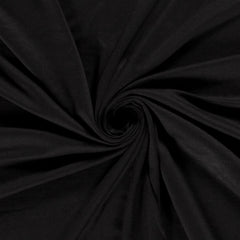
Viscose

What is viscose fabric?

Viscose is a regenerated cellulose fibre made from natural cellulose, usually from wood pulp. It is often used in fabrics with a soft hand feel, smooth surface and fluid drape. Viscose can look refined and elegant, but it behaves differently from cotton or polyester because it absorbs moisture easily and can be more sensitive when wet.

Viscose is relevant for garments that need softness, movement and a comfortable feel against the skin. The final fabric can be woven or knitted, light or heavier, depending on yarn, construction and finish.

View Viscose Collection

Specifications

Construction Woven or knitted fabric, depending on the specific article

  • Composition 100% viscose or blends with polyester, polyamide, elastane, cotton or linen
  • Fabric weight Commonly around 90 to 280 g/m², depending on construction, yarn type and finish
  • Stretchability Little to no stretch in woven viscose; more stretch in knitted viscose or blends with elastane
  • Abbreviations CV or VI = viscose, PES = polyester, PA = polyamide, EL = elastane, CO = cotton, LI = linen

Properties of the fabric

Viscose fibres are made by processing cellulose into a spinnable fibre. The result is a fabric that can feel soft, cool and breathable, with a drape that works well for fluid silhouettes. Viscose often takes colour well, which can give dyed or printed fabrics a rich appearance.

The fibre has relatively low wet strength compared with many synthetic fibres, so careful washing and drying are important. Viscose fabrics can shrink, crease and distort if handled too harshly when wet. Blends with polyester, polyamide or elastane can improve stability, recovery or ease of care.

Applications

  • Blouses and tunics.
  • Fluid dresses.
  • Wide-leg trousers.
  • Skirts with drape.
  • Lightweight tops.
  • Scarves.

Care instructions

  • Wash viscose usually at 30°C on a gentle programme, depending on composition and finish.
  • Wash inside out and avoid heavy mechanical action, because viscose is more sensitive when wet.
  • Avoid high tumble-drying temperatures, as they can cause shrinkage or distortion.
  • Air drying flat or on a hanger is preferred, depending on garment weight and shape.
  • Pre-wash viscose before cutting when shrinkage could affect the final size.

Certificates

  • OEKO-TEX Standard 100 may be available depending on the specific article.

Practical tip

Handle viscose gently when wet and avoid stretching it during washing, drying or pressing. For garments with long seams or bias-cut panels, let the fabric relax before hemming to reduce uneven length changes.

Do you have a specific question about Viscose or an application?
Our AI assistant will help you immediately.

Zum Warenkorb hinzugefügt

Willkommen zurück

0
ART.-NR.

Sie haben noch 0 Artikel in Ihrem Warenkorb.